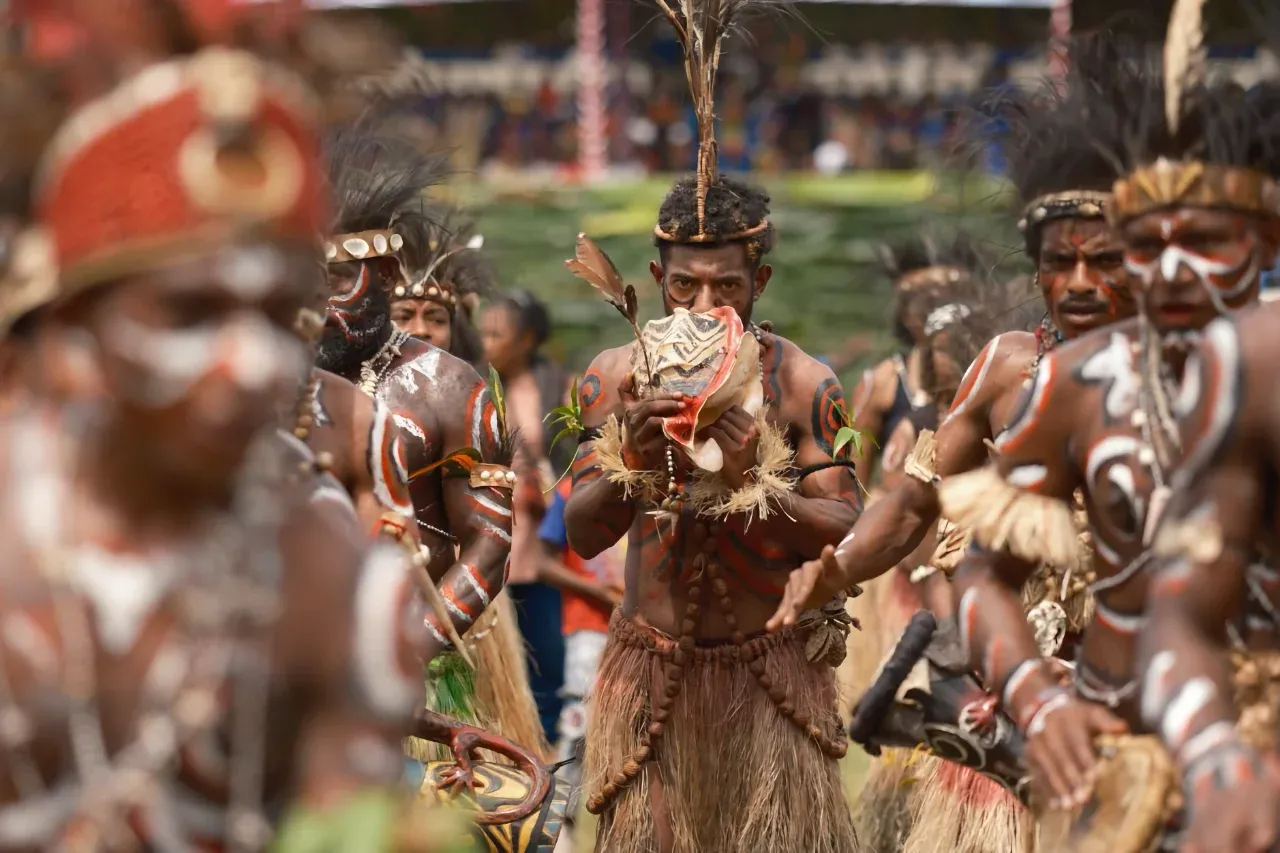
Press Release: Decolonizing Conservation: WGII Launches the Peoples’ Conservation Summit and the Indonesian Local Biodiversity Outlook Ahead of CBD COP17
(Jakarta, June 29, 2026) Amidst overlapping and misaligned environmental management policies in Indonesia, strengthening the rights of Indigenous Peoples and Local Communities (IPLCs) over their living spaces is a key prerequisite for achieving fair and sustainable conservation governance. Responding to this challenge, the Working Group ICCAs Indonesia (WGII) has officially kicked off its #RoadtoCOP17CBD campaign. This milestone was marked by the launch of the Peoples’ Conservation Summit (PCS), paired with the initiation of the Indonesian Local Biodiversity Outlook (LBO) drafting process and an open Call for Contributions, held on Monday (June 29) at PIC Creative Space in Jakarta.
Both initiatives are integral to the Indonesian civil society strategy championed by WGII, its members, and the Custodian Network of Indigenous and Community-Conserved Territories and Areas (Jaringan Pemangku Hak Areal Konservasi Kelola Masyarakat), ahead of the 17th Conference of the Parties to the Convention on Biological Diversity (CBD COP17) taking place in Armenia in October 2026. The Peoples’ Conservation Summit will be held from September 1–3, 2026, in Yogyakarta, in partnership with the Center for the Study of Democracy, Constitution, and Human Rights (PANDEKHA) at Universitas Gadjah Mada. Then, the Indonesian Local Biodiversity Outlook is designed as a rigorous, evidence-based document that captures the experiences, best practices, and grassroots evaluations of IPLCs regarding the implementation of biodiversity commitments in Indonesia. While the PCS serves as a vital consolidation space for various actors to formulate a rights-based conservation agenda, the LBO will provide the scientific and factual backing needed to elevate these voices globally.
The Root of the Biodiversity Crisis
During the opening session, Executive Coordinator of WGII, Cindy Julianty, emphasized that the biodiversity crisis cannot be divorced from current development and conservation paradigms, which have historically failed to position communities as central actors.
“Why does biodiversity loss continue despite ongoing conservation efforts? The primary cause is development that leans heavily on extraction. Second, the conservation perspective remains fractured between scientific-based and rights-based approaches; if we look at our conservation laws, current policies do not yet side with community rights. Third, genuine spaces for dialogue on human rights-based conservation have not been truly established. Therefore, we need cross-sectoral dialogue within a single platform where Indigenous Peoples take the lead as the primary actors, namely, through the Peoples’ Conservation Summit,” said Cindy.
This perspective highlights that Indonesia’s conservation challenges are not merely about protecting ecosystems; they are fundamentally about governance, rights recognition, and spaces for public participation. This reality becomes painfully apparent on the ground, particularly regarding the overlap between the Indigenous Peoples’ territories and natural resource exploitation permits.
Aria Sakti Handoko from the Indigenous Territories Registration Agency (BRWA) reinforced this by presenting startling data on the mounting pressure on Indigenous living spaces. “Currently, according to BRWA data, there are approximately 7 million hectares of mining concessions and other business permits directly overlapping with the Indigenous Peoples’ territories. The PCS agenda this September serves as the momentum to consolidate community narratives at the grassroots level.”
Echoing this sentiment, Ferry Widodo from WALHI (Friends of the Earth Indonesia) explained that the PCS is a platform for IPLCs to convey their lived experiences and political mandates directly to the international community.
“The PCS is the people’s forum, a place where Indigenous Peoples speak directly. The hope for this summit is to formulate a factual document born directly from the grassroots. It is these direct voices and mandates from the people that we will accommodate and amplify at COP17 CBD in Armenia, to show the world that the state of communities and the environment in Indonesia is not doing well.”
This narrative is reinforced by the testimony of Rukmini Paata Toheke, who illustrated that indigenous conservation practices are born from intergenerational ecological knowledge, “we don’t just guard the forest; we carry out our ancestral legacy to understand which spaces can be managed, which must be left untouched, and how to manage them wisely for our collective survival.”
National ICCA data (as of May 2026) indicates a powerful alternative to the exclusive, often conflict-inducing “fortress conservation” model, such as 527 established ICCAs and 1,010,430.68 hectares currently managed by 169 Indigenous groups and 23 Local Communities, and then 29.5 million hectares of expansion potential across Indonesia. These findings decisively prove that IPLCs are the ultimate frontline actors in maintaining ecosystem sustainability.
The Indonesian Local Biodiversity Outlook: Grassroots Voices for Global Evaluation
Alongside the PCS launch, WGII officially opened the Call for Contributions for the Indonesian Local Biodiversity Outlook. This report is being compiled as a complementary document to the national reporting on the Kunming-Montreal Global Biodiversity Framework (KM-GBF) implementation. It introduces the vital perspectives of IPLCs regarding on-the-ground conservation practices, localized challenges, and the fulfillment of human rights in biodiversity governance.
Lasti Fardilla Noor, Knowledge Management Manager of WGII, explained the strategic goal of bridging localized ecological knowledge with global policy evaluation. “The Local Biodiversity Outlook is a bridge for the narratives of Indigenous Peoples and Local Communities. We are transforming grassroots stories into credible, factual documents that complete the national picture and ensure that community contributions to achieving global biodiversity targets are scientifically recognized. We will submit this document through the official CBD platform. The LBO is not just a collection of inspiring stories; it is a space for reflection and course-correction regarding policy implementation, particularly within the Indonesian context.”
The development of the LBO is driven by a simple truth: conservation success cannot be measured solely by administrative milestones. It must also be evaluated by how effectively policies protect community living spaces and successfully curb ecological collapse. Therefore, WGII invites academics, researchers, civil society organizations, journalists, students, and community facilitators to contribute to the LBO through writing, data provision, case studies, and documentation of community-based conservation practices.
Through the Peoples’ Conservation Summit and the Indonesian Local Biodiversity Outlook, WGII hopes that the voices of Indigenous Peoples and Local Communities will not only shape national dialogue but also gain an equal, authoritative standing in global decision-making spaces. Ultimately, these initiatives aim to strengthen a conservation agenda grounded in justice, respect for human rights, and the sustainable protection of Indonesia’s extraordinary biodiversity.
Contact Person:
Zaky B., Policy Advocacy and Campaign, Working Group ICCAs Indonesia
Nafa Zahra S., Digital Content and Media, Working Group ICCAs Indonesia

Join Our Newsletter
Berlangganan buletin kami untuk mendapatkan pembaruan terbaru, berita, acara, dan aktivitas komunitas langsung ke kotak masuk Anda.
We respect you privacy, your email is safe with us.