Reflections on Sharia and Customary Law (Adat) in Aceh: Realizing Meaningful Participation of Indigenous Peoples and Local Communities in Biodiversity Management
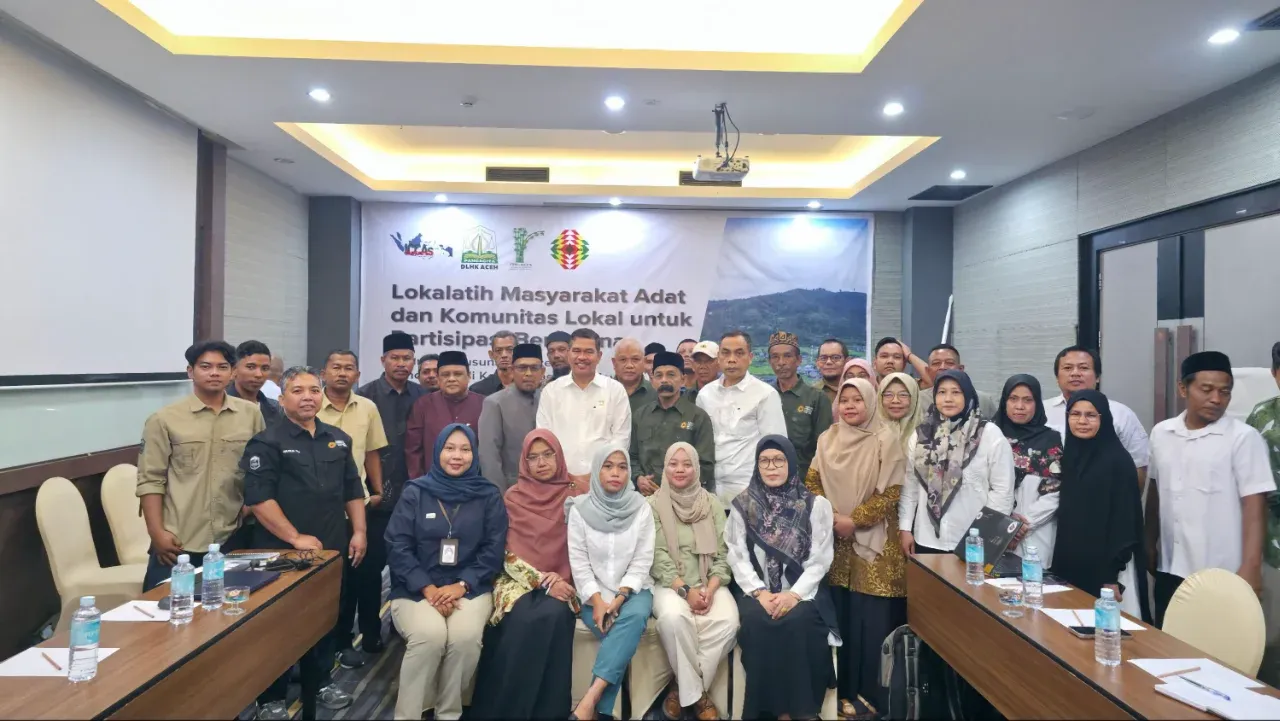
(Aceh, 09/04/26) Over two days, the Working Group ICCAs Indonesia (WGII), in collaboration with the Environment and Forestry Office (DLHK) of Aceh Province, Aceh Indigenous Peoples Network (JKMA Aceh), and Rumpun Bambu Indonesia Foundation (YRBI), conducted a workshop titled “Training Workshop for Indigenous Peoples and Local Communities on Meaningful Participation in the Formulation of Aceh Province's Biodiversity Strategy and Action Plan” in Banda Aceh City.
This workshop was a joint initiative supported by the Ministry of National Development Planning (Kementerian PPN/Bappenas) and GIZ Indonesia & ASEAN through the Strengthening National Implementation of Global Biodiversity Targets (GBF Implementation) project. It aimed to develop the foundational understanding and capacity of Indigenous Peoples and Local Communities (IPLCs) regarding biodiversity, enabling communities to participate fully and meaningfully in the implementation of the Indonesian Biodiversity Strategy and Action Plan (IBSAP) 2025–2045 at the local, provincial, and national levels.
Deepening Biocultural and Governance Perspectives
Throughout the proceedings, representatives of IPLCs and development partners across Aceh Province actively participated by providing inputs, reflections, and critical notes requiring follow-up action. Approximately 34 participants attended, representing regencies and cities including Gayo Lues, Bener Meriah, Aceh Jaya, Pidie, Sabang, Aceh Besar, and Lhokseumawe. The region’s biocultural diversity, combined with the integration of Islamic law (Sharia) and customary law (adat) values, brought a rich variety of perspectives to the discussions and Q&A sessions. Various topics were explored in depth, including an introduction to core biodiversity issues and current challenges, the objectives and foundational concepts behind formulating the Aceh Biodiversity Management Master Plan (RIP KEHATI), conservation practices in Aceh, both within state policy frameworks and through on-the-ground execution, and then traditional knowledge systems deeply rooted in IPLC heritage.
Cross-Sectoral Synergy
Harboring 20 of Indonesia’s 22 ecosystem types, Aceh Province bears a unique, vital responsibility with direct implications for human survival; regional policies must actively drive natural resource protection and inclusive governance.
Sustainability relies on synergy, whether among government bodies, communities, academics, NGOs, or other development partners.
In other words, cross-sectoral collaboration is key to safeguarding biodiversity amidst the global ecological crisis. Furthermore, Sanusi M. Syarif, S.E., M.Phil., Director of YRBI, emphasized that community-based biodiversity management in Aceh is rooted in practices observed for hundreds of years and institutionalized through adat. This encompasses customary laws, rules, institutions, and dispute resolution mechanisms (peradilan adat). This deep-rooted structure transformed the workshop from a simple discussion forum into an active, participatory platform designed to formulate concrete, collaborative next steps.
Institutionalizing Meaningful Public Participation
Through these efforts, the traditional knowledge and aspirations of IPLCs can be systematically identified and integrated into the drafting of the Aceh Biodiversity Profile and Master Plan (RIP KEHATI). This engagement has reflected truly meaningful participation that safeguards the community’s right to be informed, heard, considered, and provided with explanations. Furthermore, involving IPLC representatives and other non-governmental actors in the official Working Group via a Governor Decree (SK Gubernur) marked a vital first step in strengthening the public’s standing in biodiversity policy formulation.
In closing, Lasti Fardilla Noor, Knowledge Management Manager at WGII, highlighted three main recommendations emerging from the workshop, such as the establishment of Participatory Channels; creating dedicated avenues where IPLCs and other non-governmental actors can submit suggestions, inputs, or critiques regarding the draft Aceh Biodiversity Profile and Master Plan, building a structured platform to accommodate the need for meaningful IPLC participation, spanning from implementation to post-ratification monitoring of the Master Plan, and grounding policies in careful consideration of the historical and prevailing real-world conditions at the community level, particularly regarding biodiversity management across genetic, species, and ecosystem levels, alongside efforts to mitigate ecological disaster risks in Aceh.

Join Our Newsletter
Berlangganan buletin kami untuk mendapatkan pembaruan terbaru, berita, acara, dan aktivitas komunitas langsung ke kotak masuk Anda.
We respect you privacy, your email is safe with us.